Ducks are often a child’s first real introduction to the diversity of the natural world. From the bright yellow plastic toy in the bathtub to the vocal mallards at the local pond, these birds are approachable and familiar. Most parents look for coloring activities just to fill a rainy afternoon. But there is a much deeper developmental benefit happening when a child picks up a crayon to color a duck. It is about more than just staying inside the lines. It is about building the foundation for academic success through physical play.
Let’s talk about bilateral coordination. This is a fancy term for using both sides of the body at once. When a toddler sits down with one of these duck sheets, they use their non-dominant hand to hold the paper steady while the dominant hand moves the crayon. This cross-body communication is essential. It strengthens the neuropathways that kids will eventually need for typing, cutting with scissors, and even tying their shoes. Without this ‘stabilizer’ and ‘worker’ hand relationship, tasks become much more difficult as they enter grade school.
Then there are the intrinsic hand muscles. Coloring small areas, like a duckling’s beak or the ripple of water, requires the pincer grasp. This involves the thumb and index finger working together. As children manipulate their drawing tools, they are actually doing a workout for the tiny muscles in their palms. This strength is the direct precursor to a functional pencil grip. If we want kids to write comfortably for hours later in life, they need these low-pressure opportunities to build hand endurance now.
Visual-spatial integration plays a role too. When a child decides to color the head of a mallard green and the body brown, they are practicing taxonomical sorting. They are identifying specific characteristics that separate one species from another. It is early scientific observation hidden in a fun activity. And honestly? Sometimes kids just want to color a purple duck because it looks cool. That is fine too. The goal is to get them engaged with the page. These 23 printables offer enough variety to keep them busy while their brains do the heavy lifting of development. Print a few, grab the crayon box, and let them work at their own pace.
1. Duckling with a Tiny Polka-Dot Umbrella
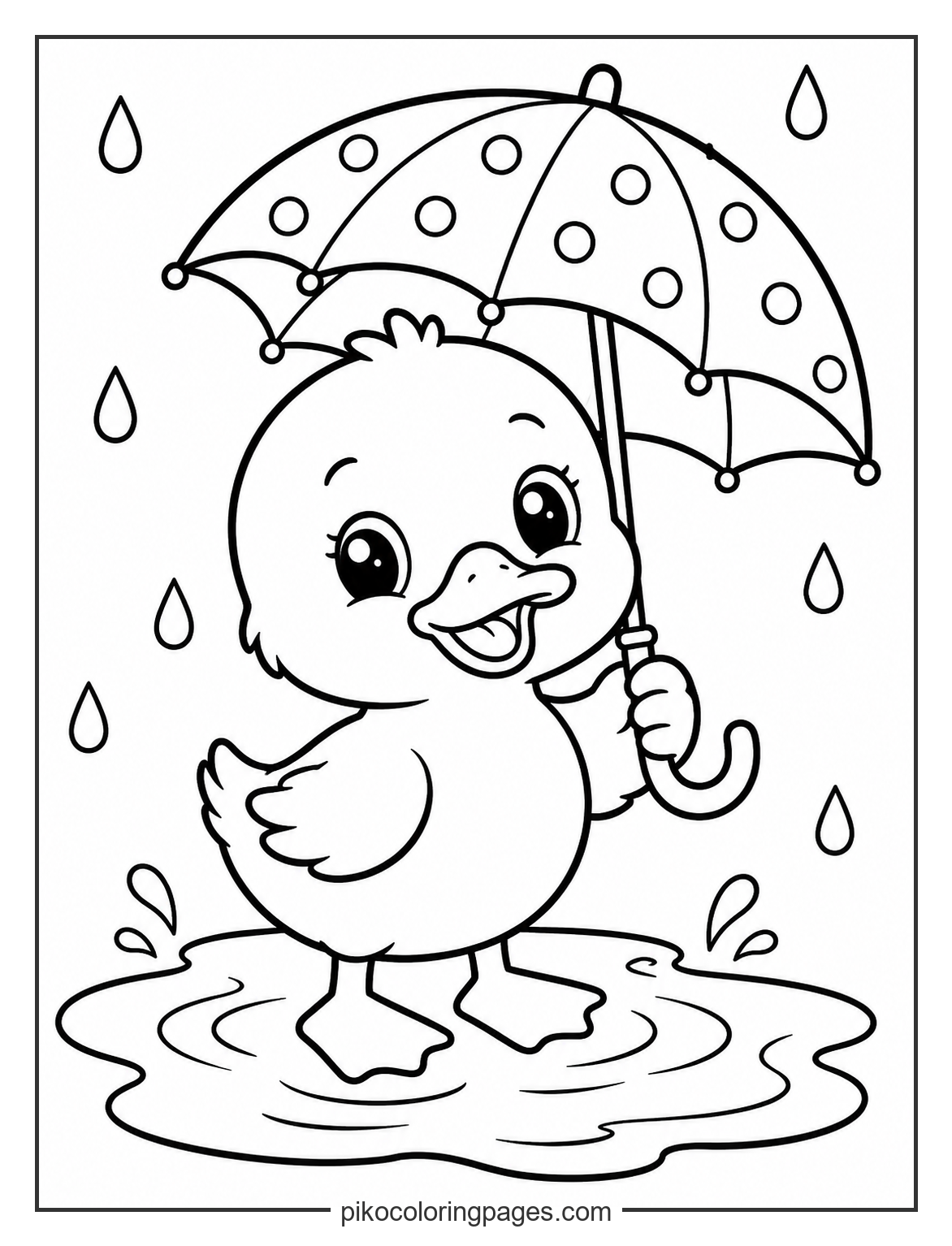
Do you ever wonder how to encourage kids to use more than one color on a single character? This specific page features a polka-dot pattern on the umbrella, which naturally invites children to switch between different crayons. The lines are thick and forgiving, making it an excellent choice for three-year-olds who are still mastering the art of stopping their hand’s movement at a boundary.
2. Male Mallard Duck Swimming in Reeds
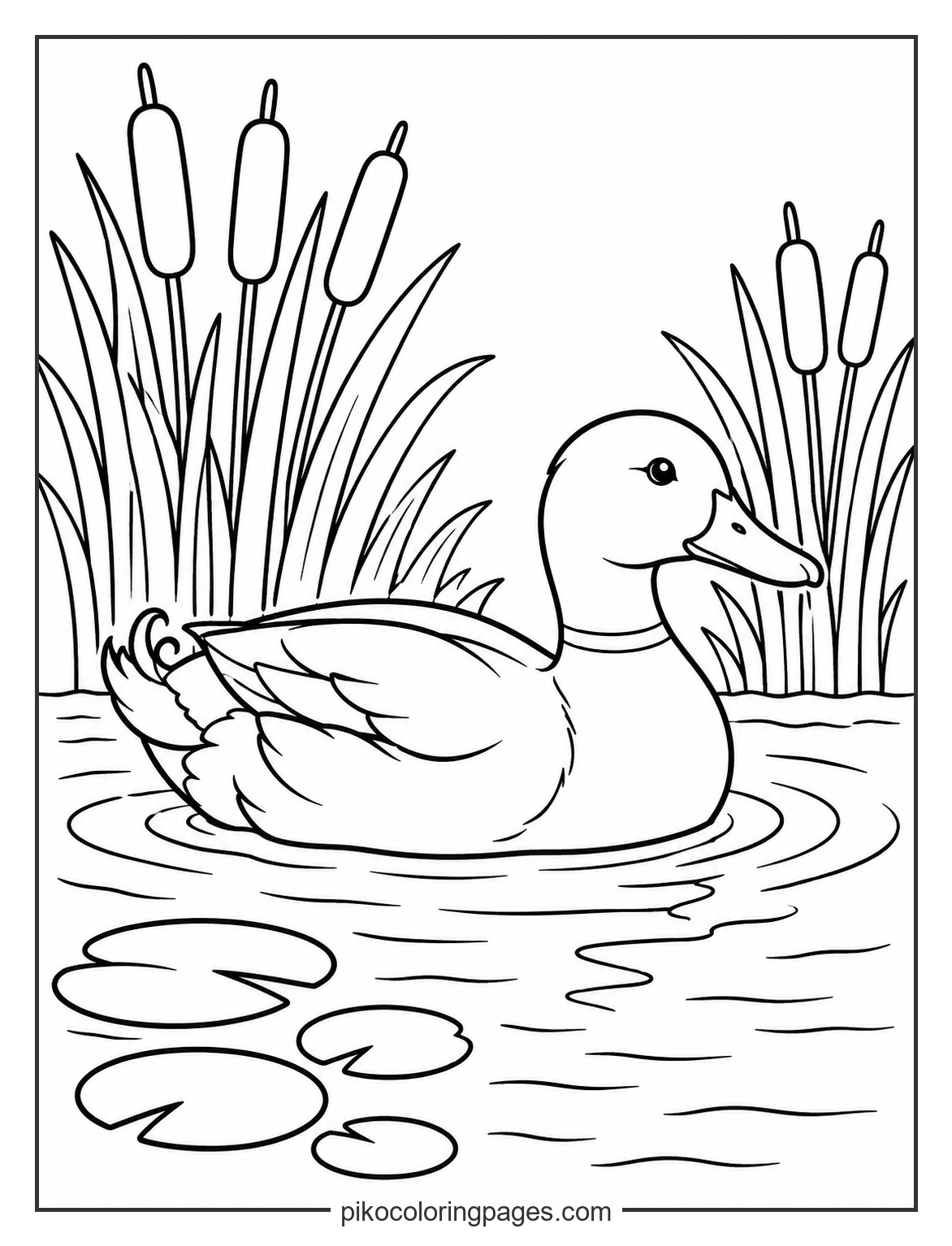
The mallard is paddling through a quiet marsh, perhaps looking for a snack of aquatic plants or small insects. Notice how the artist has included the distinct ring around the neck and the broad bill. This scene provides a wonderful opportunity for a mini-lesson on how wild ducks live in the wetlands and use those reeds for protection from the wind.
3. Classic Rubber Ducky with Bubbles
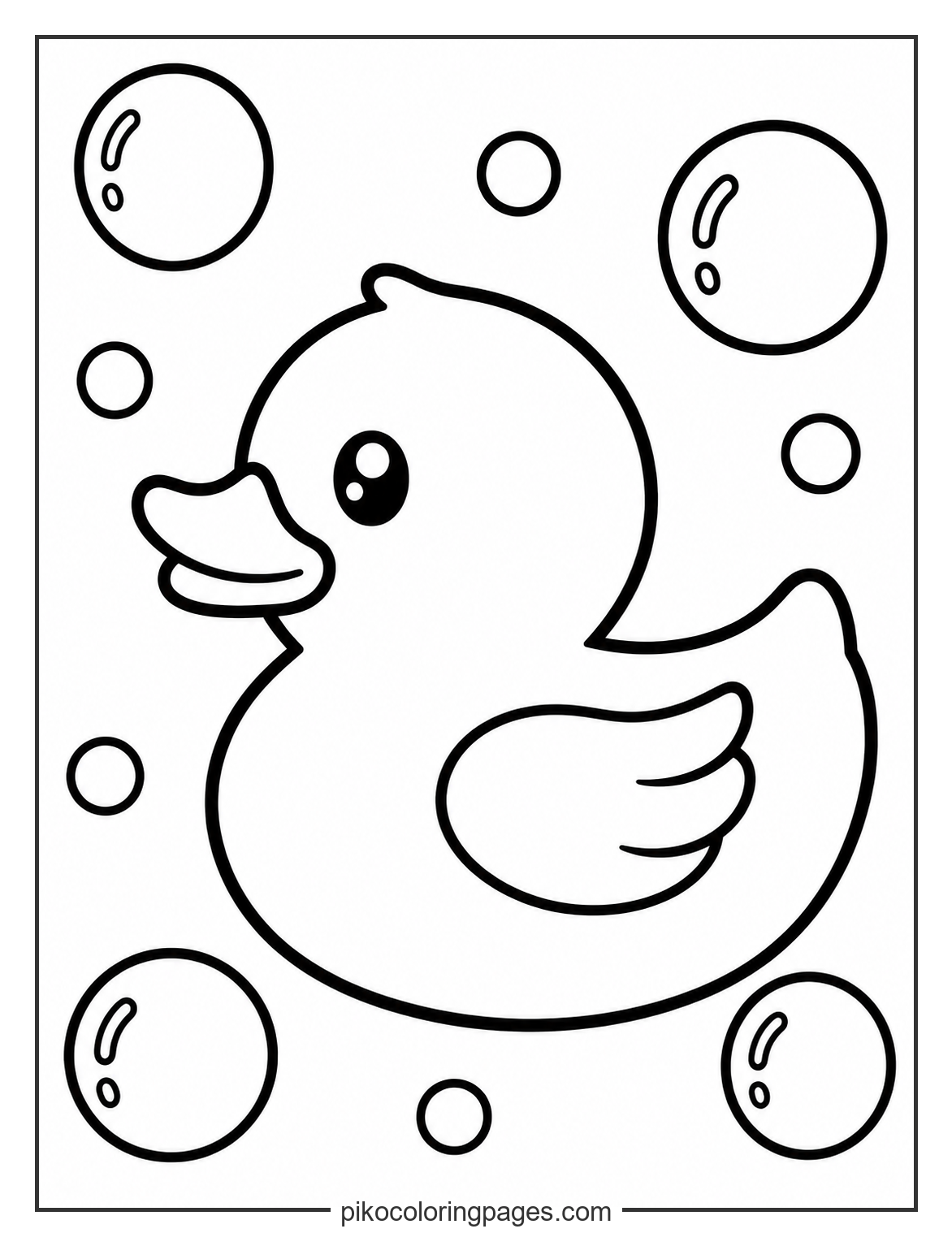
This layout is all about the power of the circle. The large, round bubbles and the curved body of the rubber duck create a very low-stress environment for a beginner artist. There are no sharp corners to navigate, and the negative space is balanced so that even a single color can fill the entire duck and still look like a finished piece of art.
4. Ornate Duck Silhouette Mandala
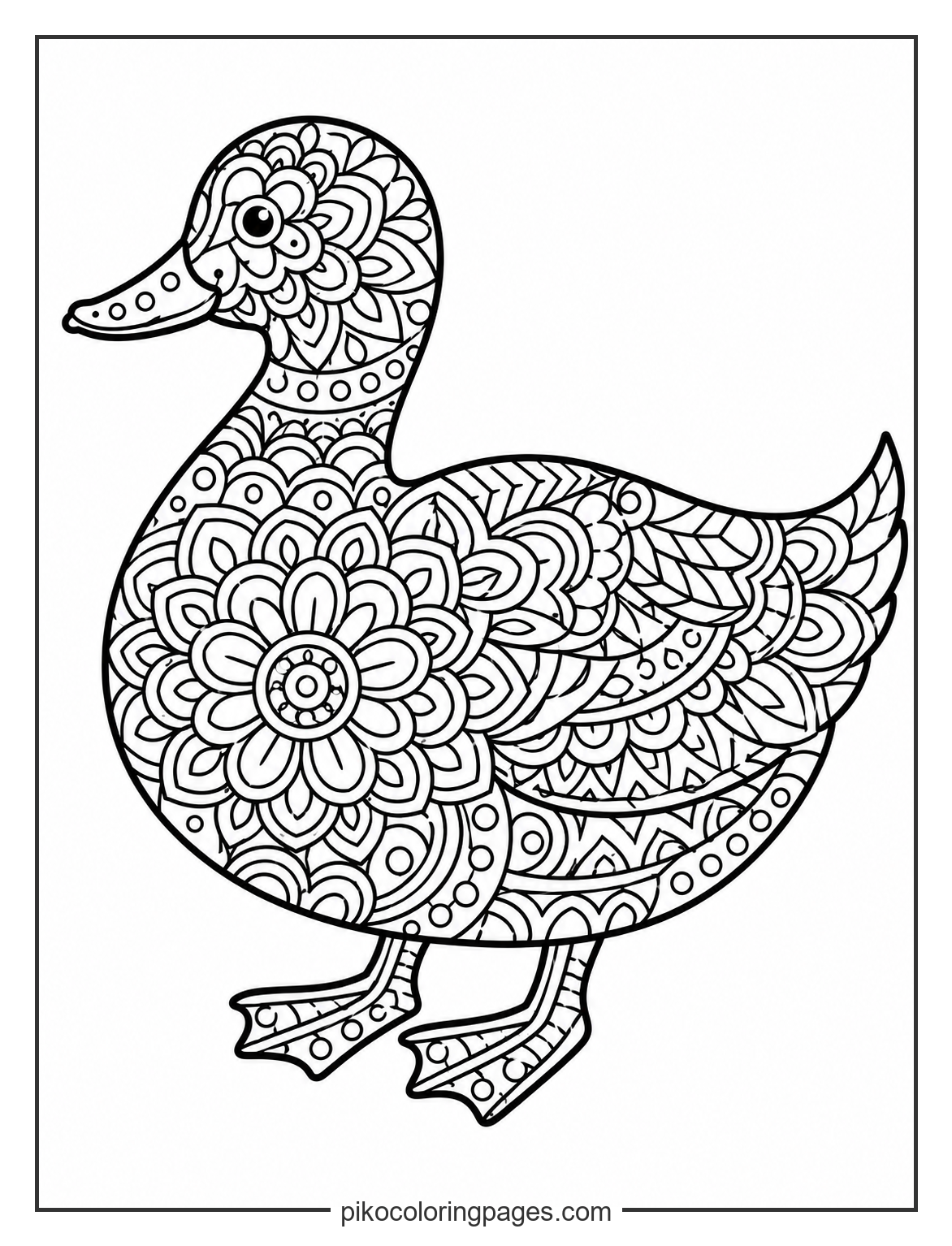
Ducks are members of the Anatidae family, which includes over 130 species of waterfowl. This illustration uses the familiar profile of a pond duck but fills it with complex geometric structures. The repetition in the patterns is not just for aesthetics; it provides a rhythmic coloring experience that can be highly meditative for older children or parents who need a mental break.
5. Three Ducklings Following Mother Duck
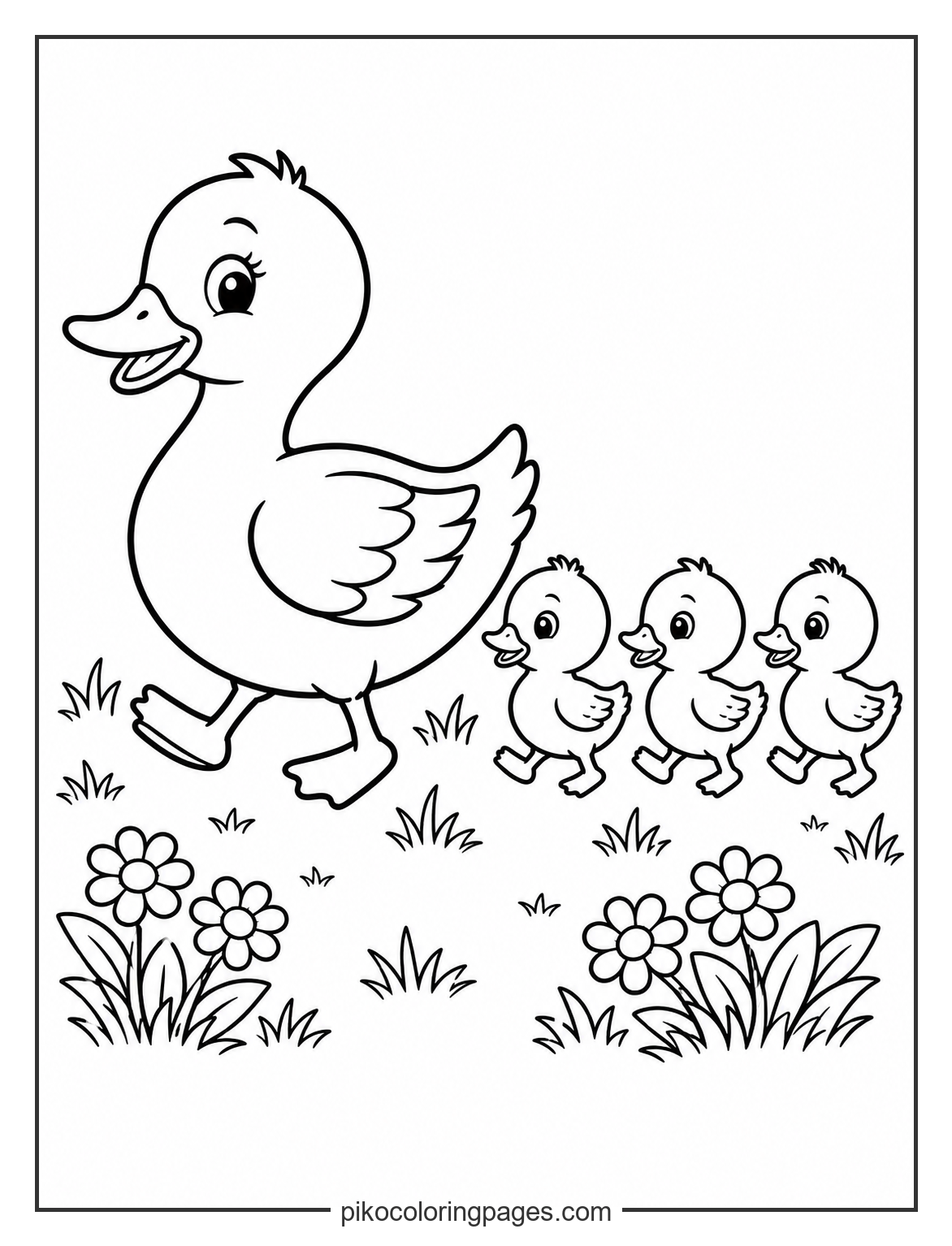
Have you noticed how ducklings naturally follow their mother in a perfect line? This is called imprinting, and it happens almost immediately after they hatch. This coloring sheet allows children to experiment with repeating colors across the three smaller ducklings, helping them understand patterns while they work on their spatial awareness by coloring four separate characters on one page.
6. Wood Duck Perched on a Branch
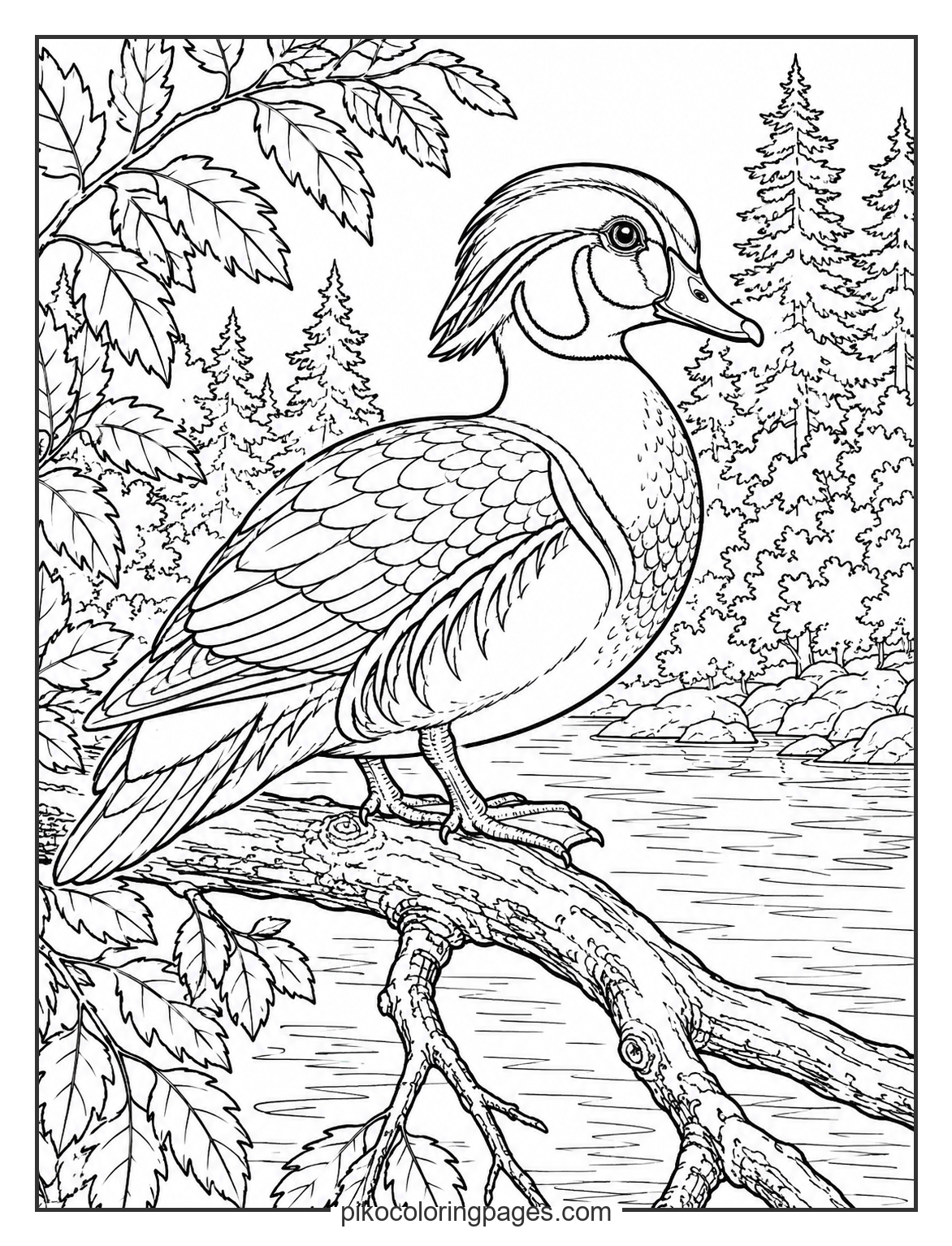
The wood duck is hiding among the leaves, looking out over the creek from its high perch. It has a very fancy crest on its head that makes it look like it is wearing a helmet. Unlike most other ducks, these birds actually have sharp claws so they can grip the bark of trees and nest in hollow trunks high above the ground.
7. Happy Duck with a Bowtie
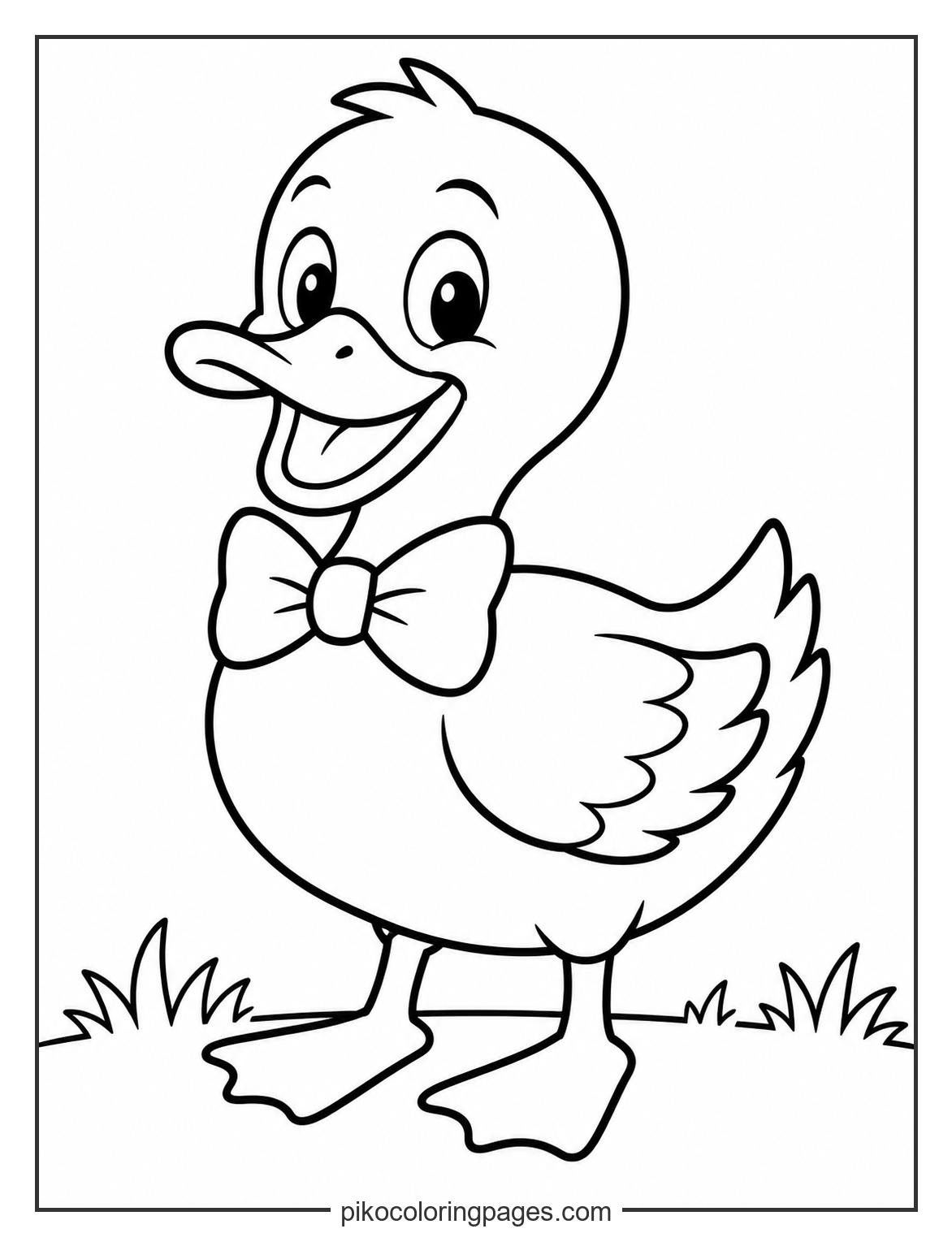
The thick borders on this character are intentional. They create a ‘safety zone’ for little hands that are still learning to control the speed of their crayon. The bowtie serves as a focal point in the center of the image, encouraging the child to look at the symmetry of the character and choose a contrasting color for the accessory to make it pop.
8. Duckling Eating a Watermelon Slice
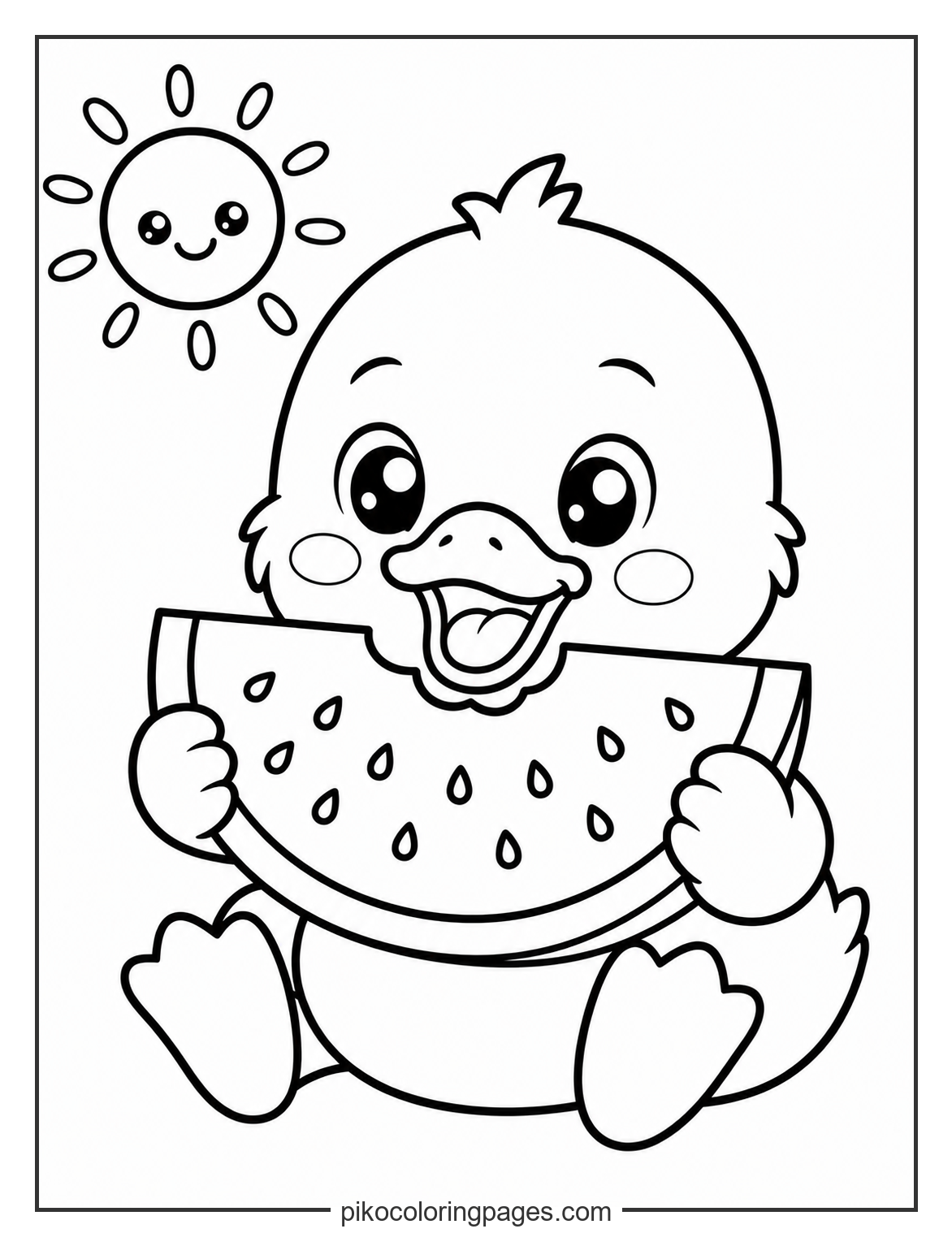
Ducks are omnivores, meaning they eat both plants and small animals like snails or fish. While they might not eat giant watermelon slices in the wild, they certainly enjoy many types of fruit and vegetation. This playful scene is perfect for talking about summer foods and healthy snacks while the child works on coloring the small seeds and the rind of the melon.
9. Ducks Flying in V-Formation
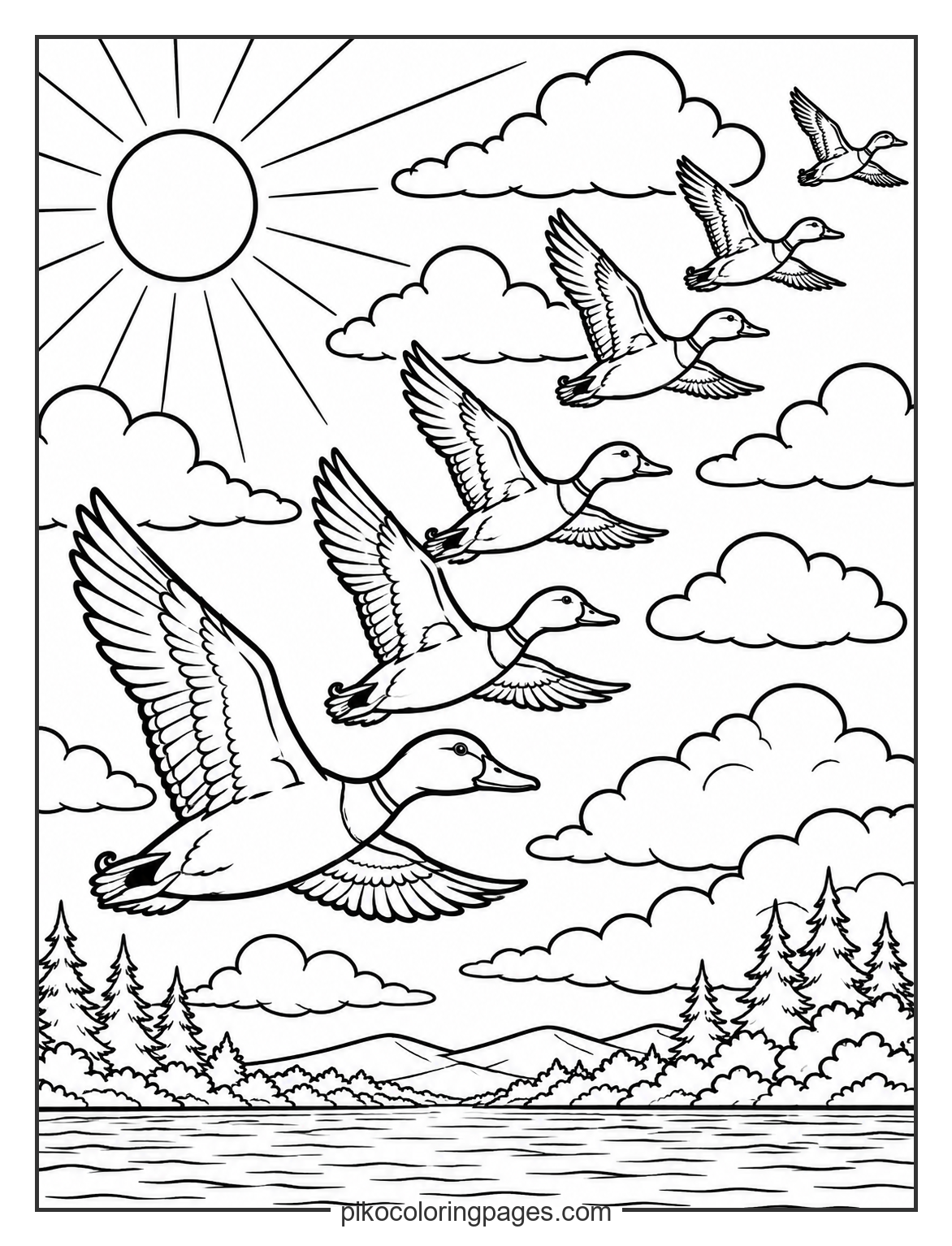
Why do ducks fly in a V-shape? It is actually a brilliant way to save energy. The duck in the front works the hardest, and the ones behind it get a ‘lift’ from the air moving off the leader’s wings. This page allows kids to practice coloring multiple subjects that get progressively smaller, which is a great lesson in perspective and scale within a drawing.
10. Duckling in a Nest
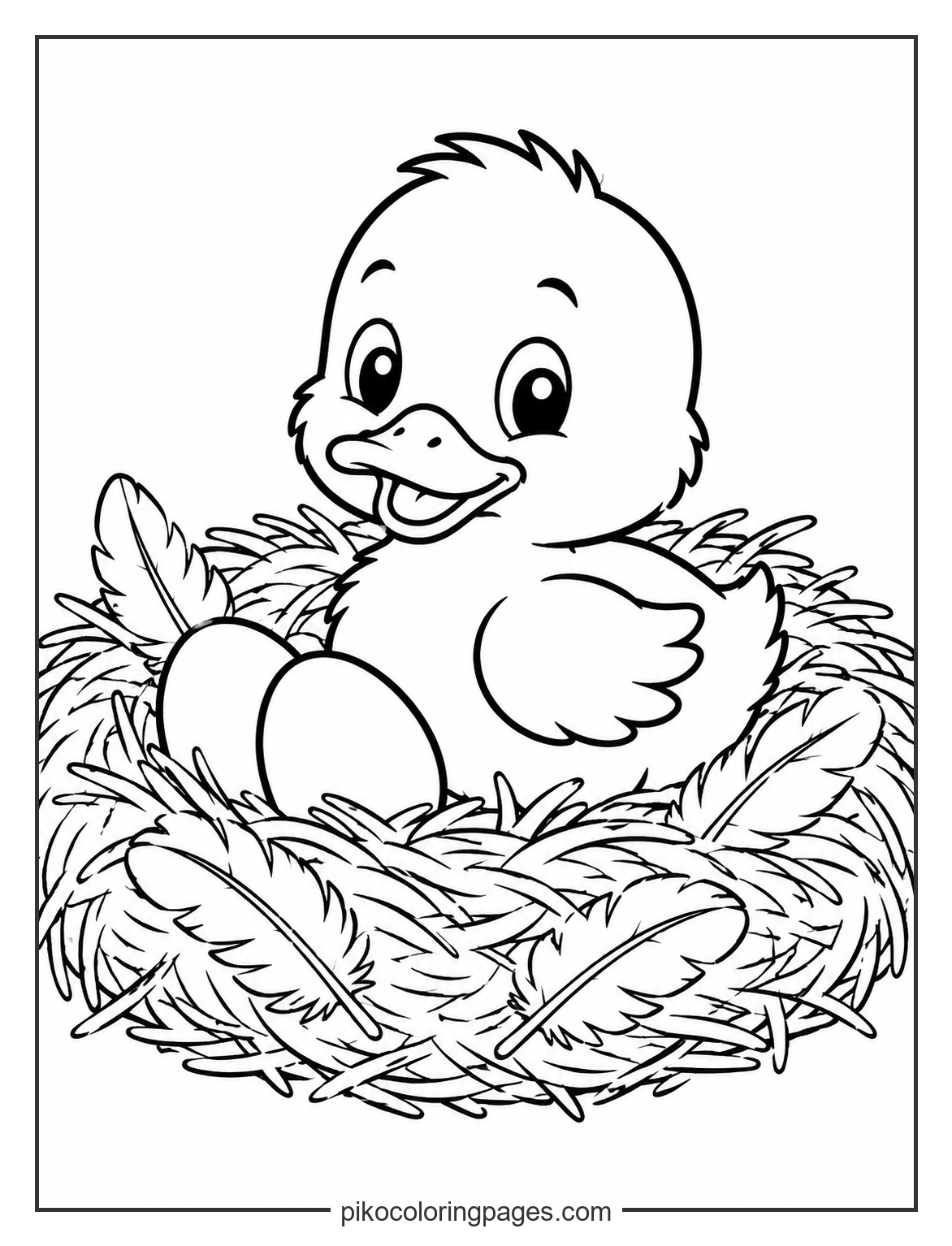
The duckling is waiting patiently for its siblings to hatch from the eggs next to it. Most duck nests are lined with soft down feathers that the mother duck pulls from her own chest to keep the babies warm. Coloring the textured lines of the hay in the nest provides a different tactile visual than the smooth feathers of the duckling itself.
11. Abstract Duck and Water Lilies
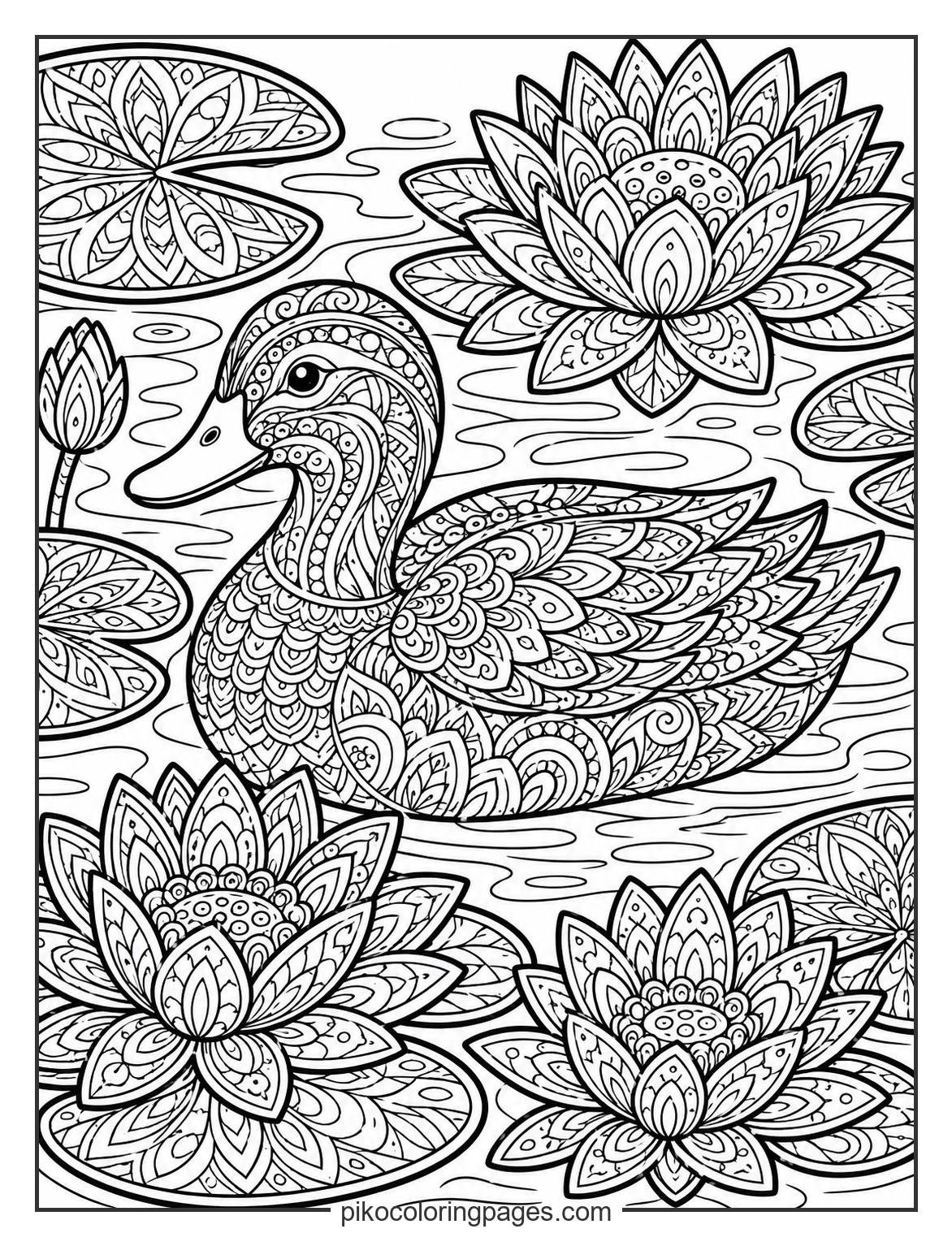
This design balances the solid, organic curves of the lily pads with the high-detail geometric patterns inside the duck. From a design perspective, the varying line weights help the duck stand out from the busy background. It is an ideal piece for developing sustained attention and focus, as there are many small sections that require careful color selection.
12. Duck Wearing a Chef Hat
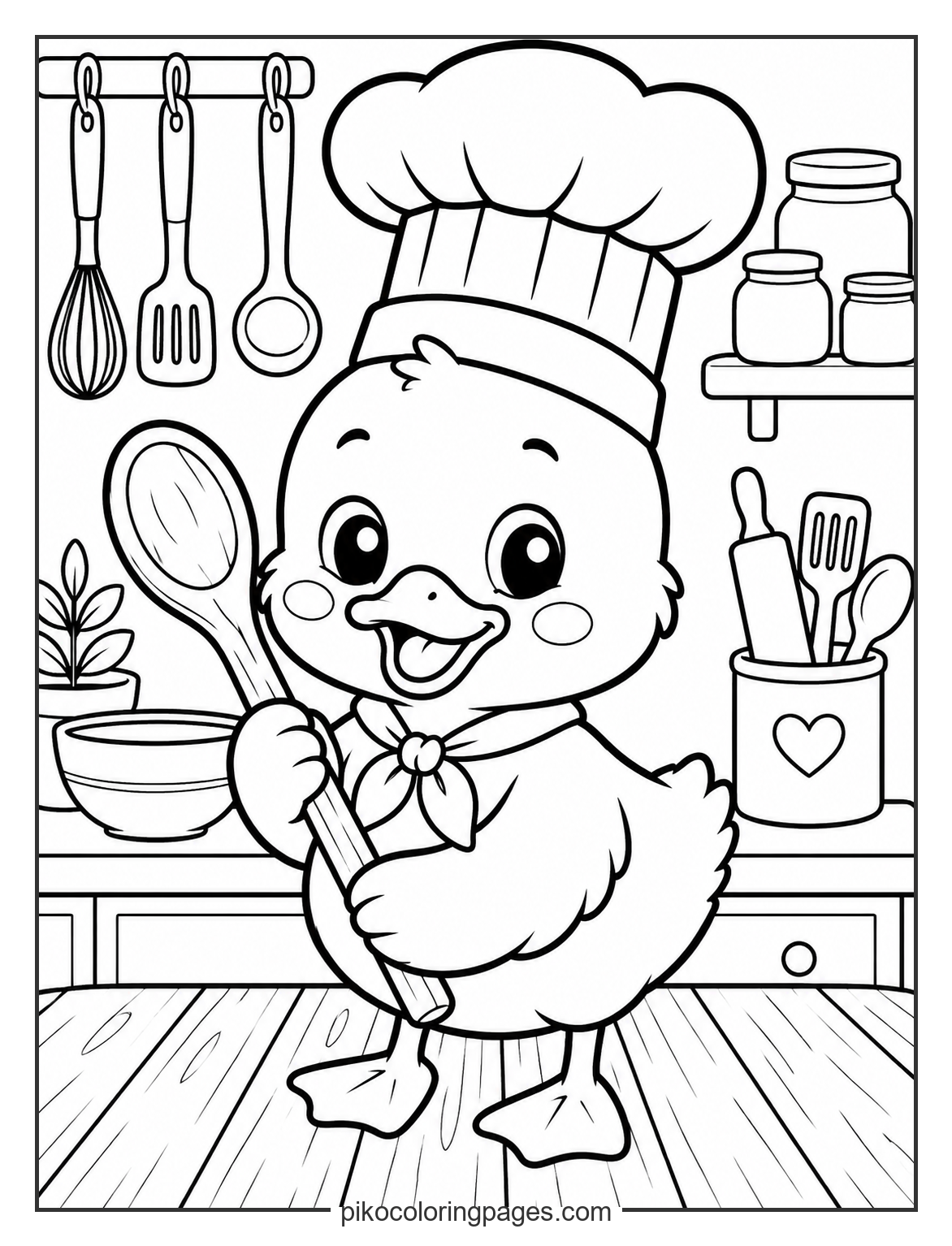
A duck’s bill is full of sensitive nerves, almost like our fingertips, which help them find food in murky water. Our little chef here is using a spoon instead! This whimsical scene encourages imaginative play. Ask your child what they think a duck would cook for dinner. It is a great way to bridge the gap between a simple coloring activity and creative storytelling.
13. Mandarin Duck with Exotic Feathers
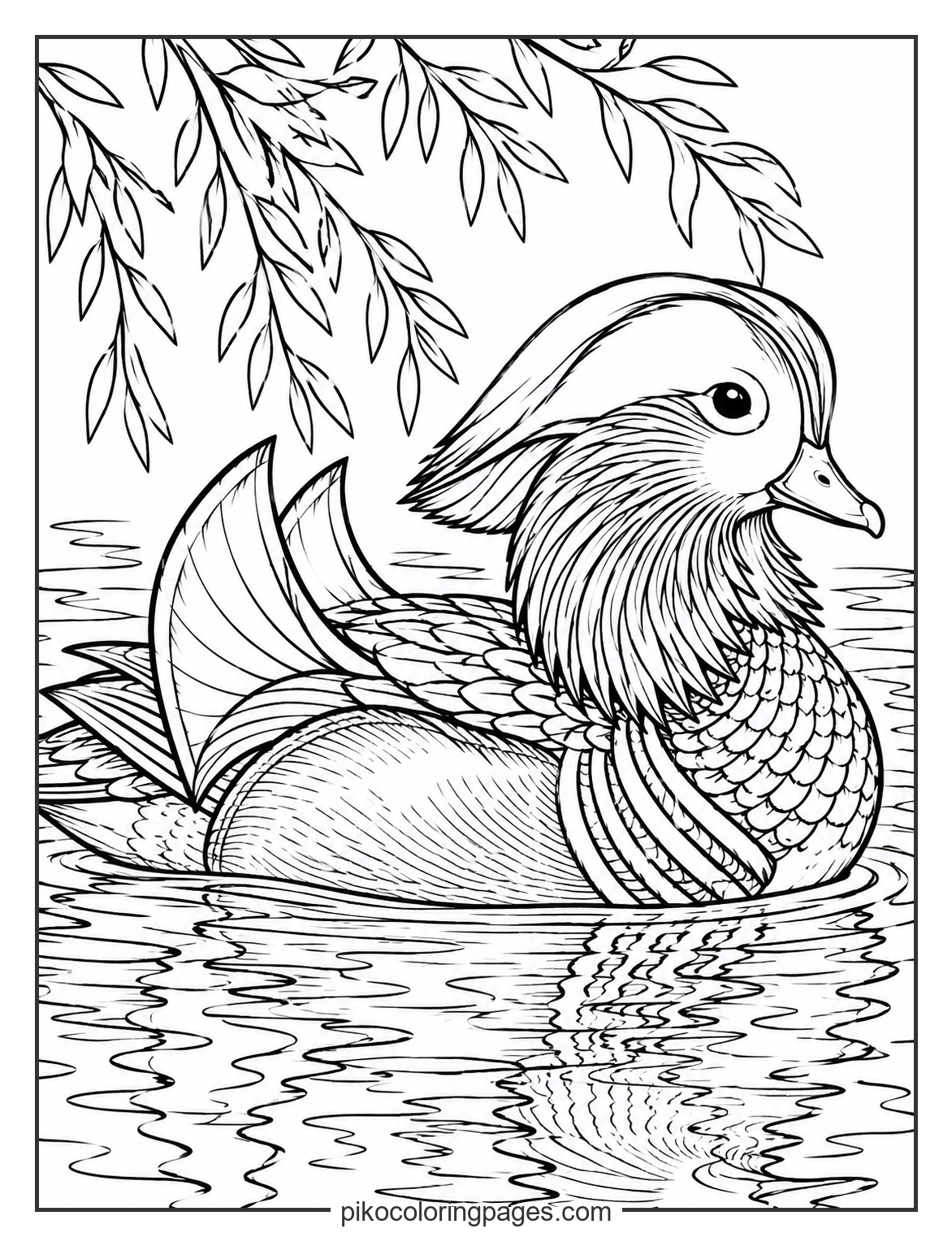
How would you color a bird known for having almost every color of the rainbow? The Mandarin duck is famous for its bright oranges, purples, and greens. Because this page has so many distinct feather sections, it is perfect for children who want to practice their color blending or for those who just love a high-detail challenge that results in a vibrant finished product.
14. Duckling with a Balloon
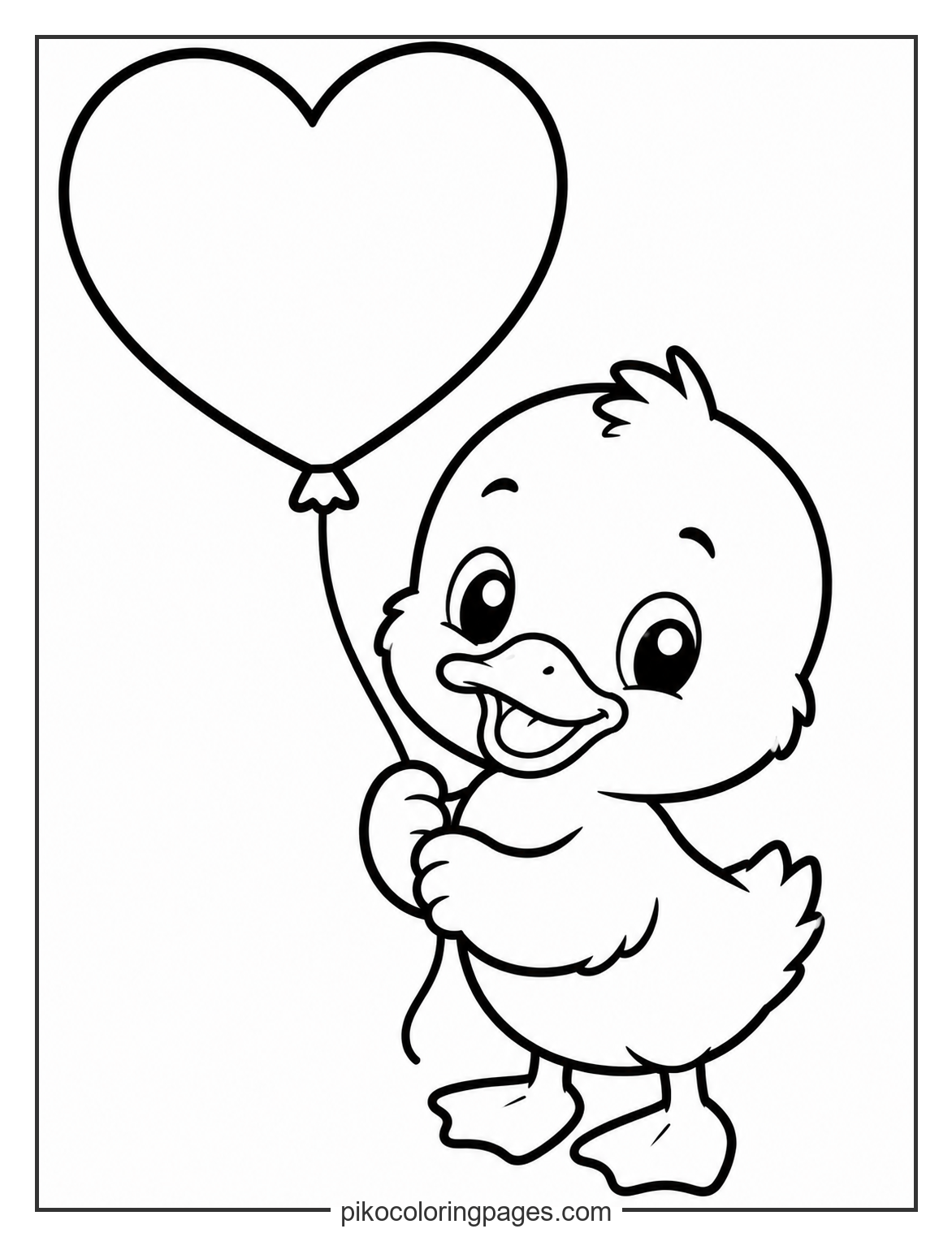
The heart-shaped balloon in this scene is floating high above the duckling’s head. The long, straight string provides a great opportunity for kids to practice drawing a steady line. This page is designed to be completed quickly, giving the child a sense of accomplishment and pride in finishing a whole page by themselves before their attention span wanes.
15. Duckling in a Flower Pot
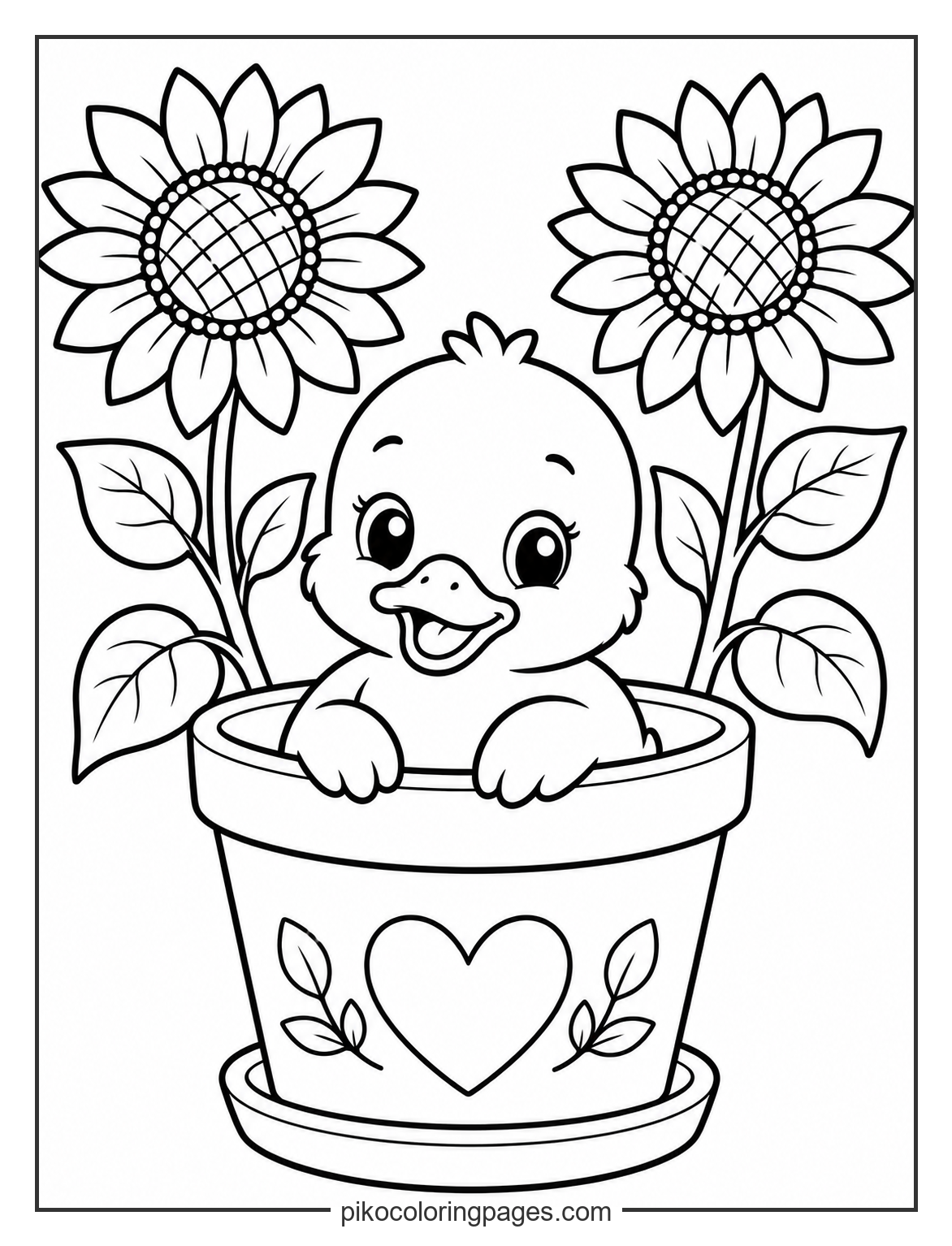
Gardeners often find that ducks are great helpers because they love to eat slugs and snails that might otherwise damage the flowers. This duckling is just hanging out in a terra cotta pot, surrounded by giant sunflowers. The large petals of the flowers are easy for small hands to color, while the center of the sunflower allows for some fun textured ‘dot’ coloring.
16. Duck Preening its Feathers
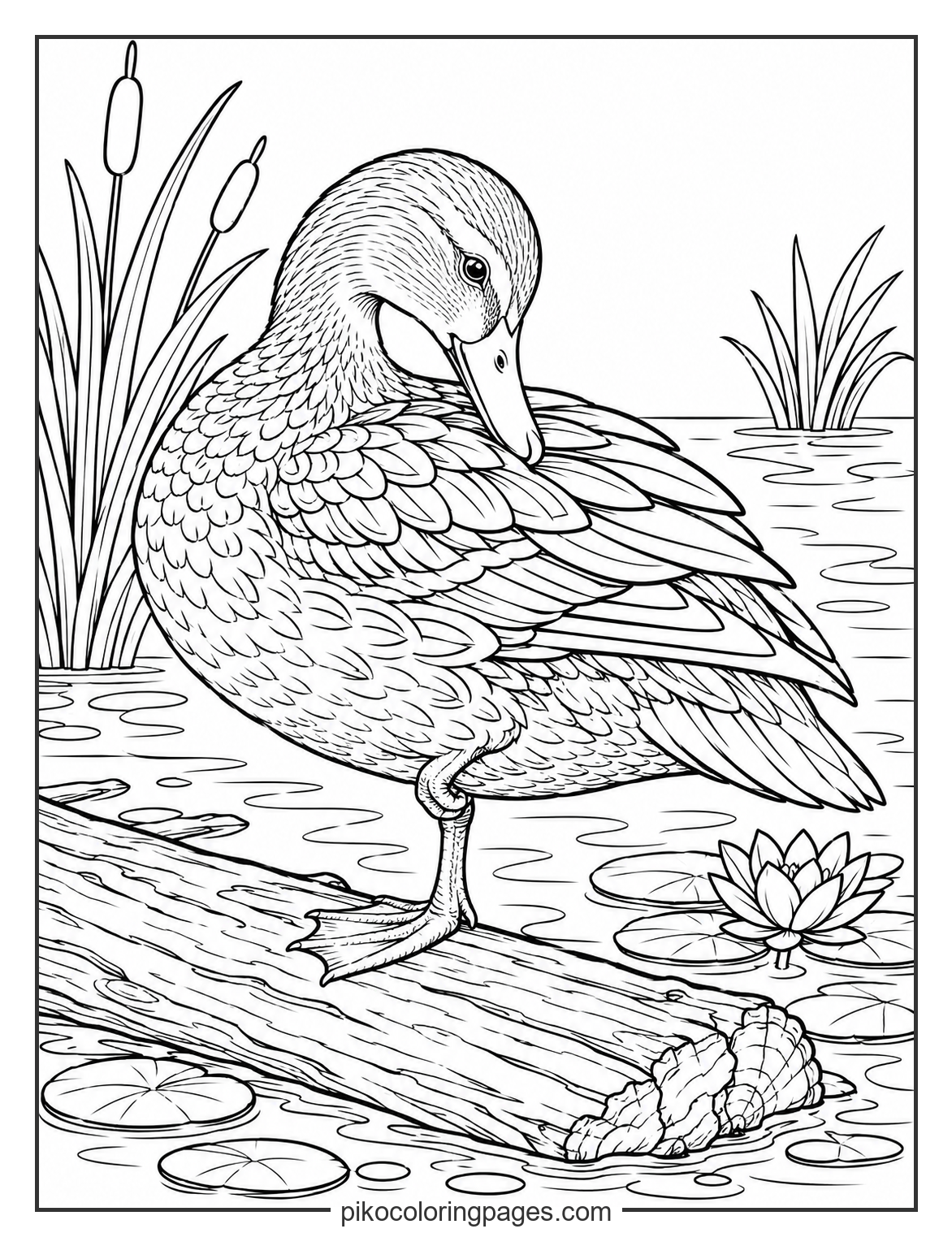
Ducks have a special gland near their tail that produces oil. When they ‘preen’—like the duck in this picture—they use their beak to spread that oil all over their feathers. This is what makes them waterproof! This realistic pose is a great way to show how birds care for themselves in the wild, and the log provides a nice wood-grain texture to color.
17. Rubber Duck on a Wave
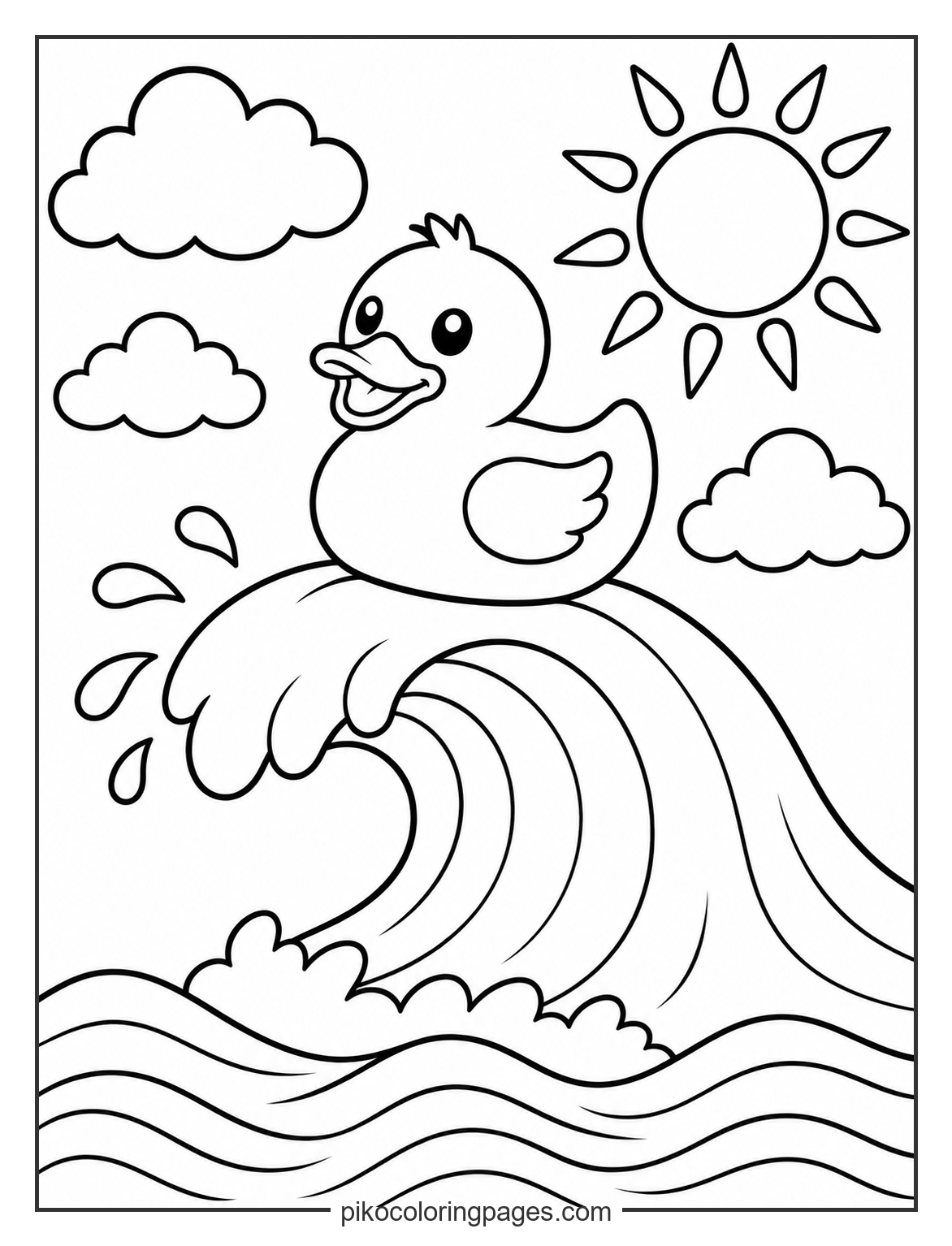
This image uses bold, sweeping lines to represent the movement of water. By keeping the wave as one large shape, it allows the child to practice large-motion coloring, moving their whole arm instead of just their wrist. This is a foundational step in physical development that eventually leads to the more controlled, smaller movements needed for handwriting.
18. Duck Family Mandala Circle
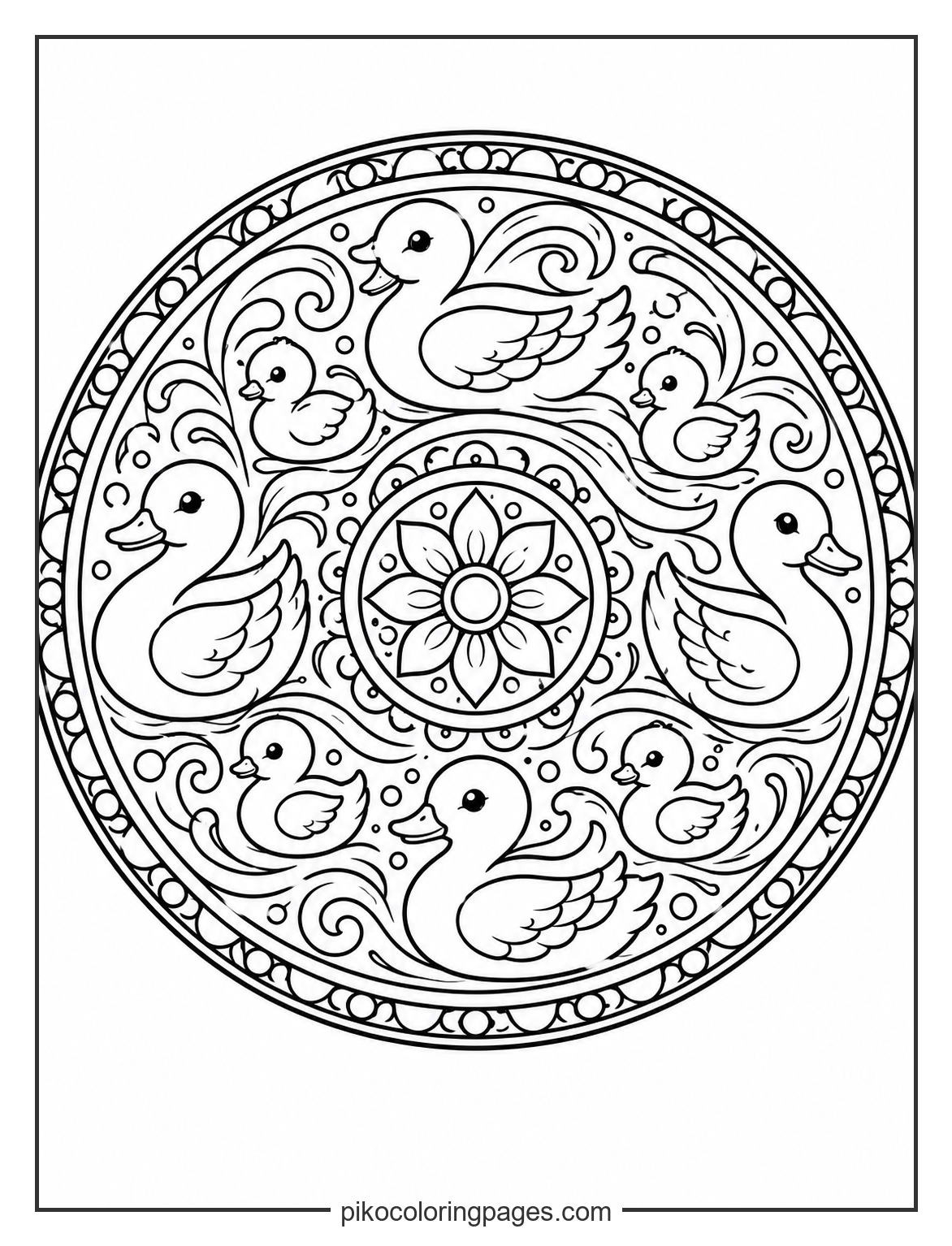
Ducks are highly social birds that live in groups called ‘teams’ or ‘paddlings’ when they are on the water. This circular mandala represents that social bond, with the birds arranged in a continuous loop. The symmetry of the design helps children understand balance and proportion, making it a great cross-over between art and basic geometry concepts.
19. Duckling Wearing Winter Scarf
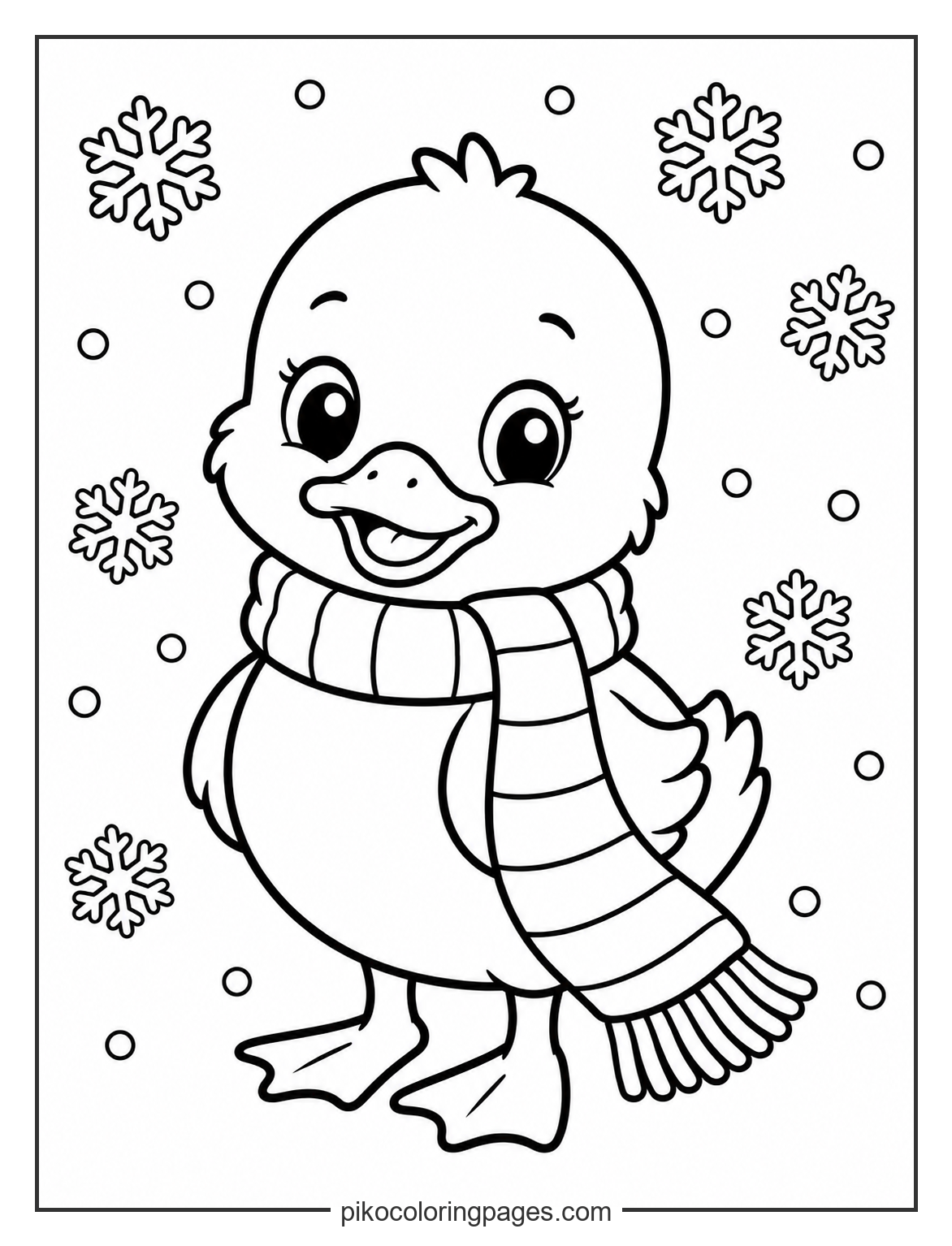
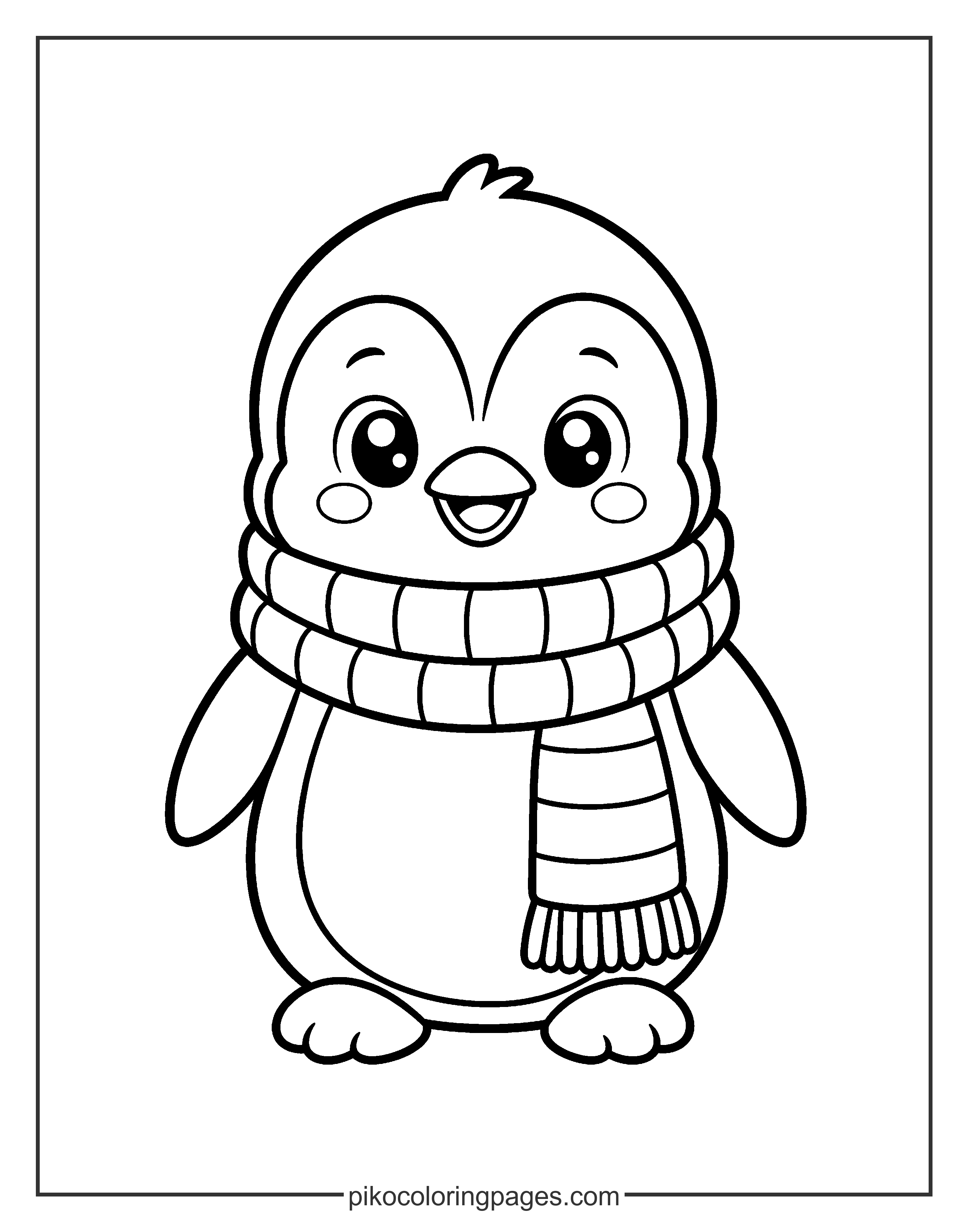
Why is the duckling wearing a scarf? While real ducks have downy feathers to stay warm, our kawaii friend is getting a little extra help. The stripes on the scarf are perfect for teaching alternating colors or creating a rainbow pattern. This page is a lovely way to transition into winter themes and talk about how animals stay warm when the temperature drops.
20. Duck Landing on Water
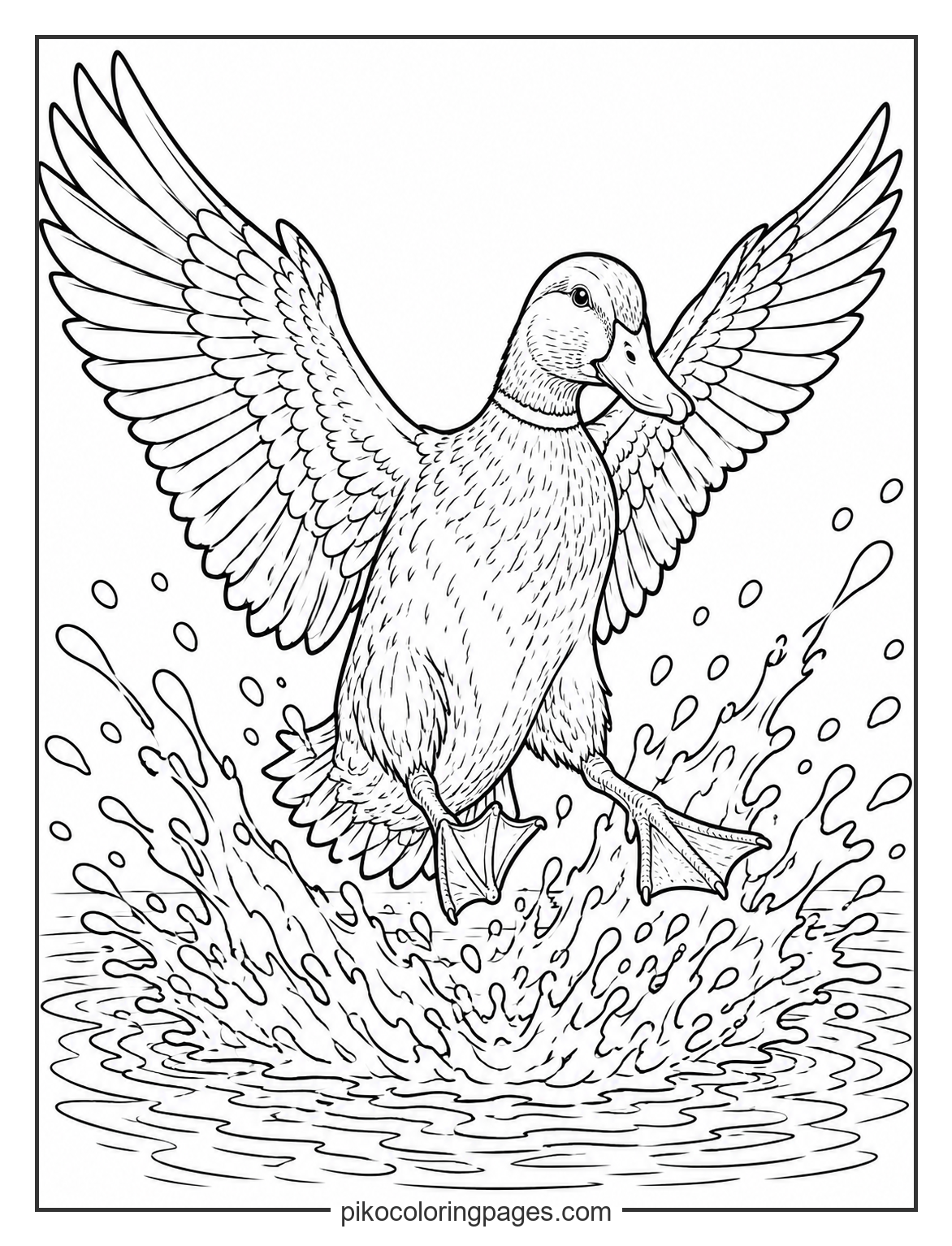
Ducks use their webbed feet like rudders and brakes when they land on water. This action shot shows the bird just as it is about to touch the surface, creating a dynamic scene with lots of energy. The ‘splash’ lines are thin and sharp, contrasting with the heavier lines of the duck’s body, providing a great lesson in drawing motion.
21. Duck and Two Little Fish
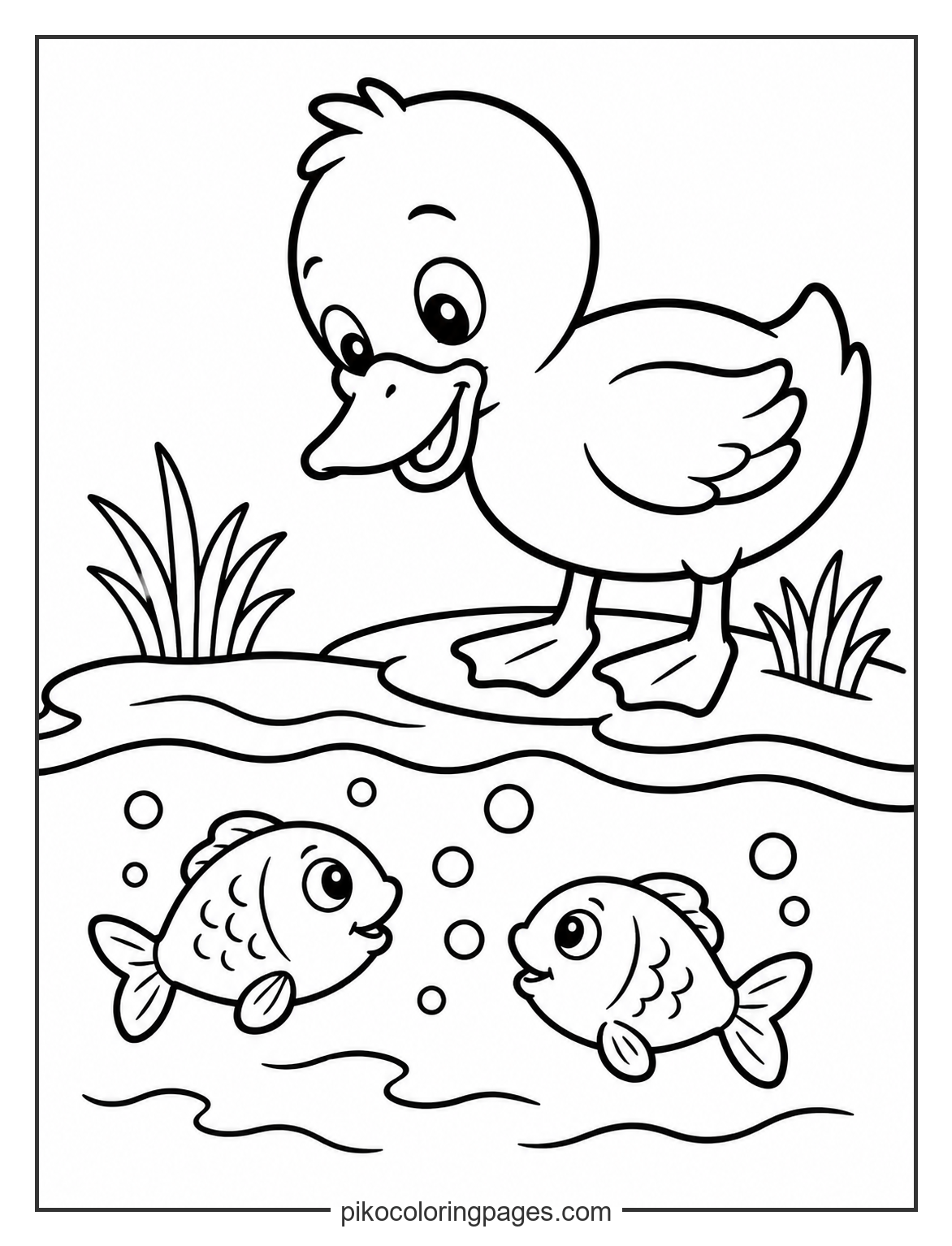
What is the duck thinking as it looks at the fish? This page is a great conversation starter for parents and teachers. You can talk about what different animals in the pond eat and how they all live together in the same ecosystem. The simple shapes of the fish and the duck make it easy for children to distinguish between the different characters on the page.
22. Duckling with a Birthday Hat
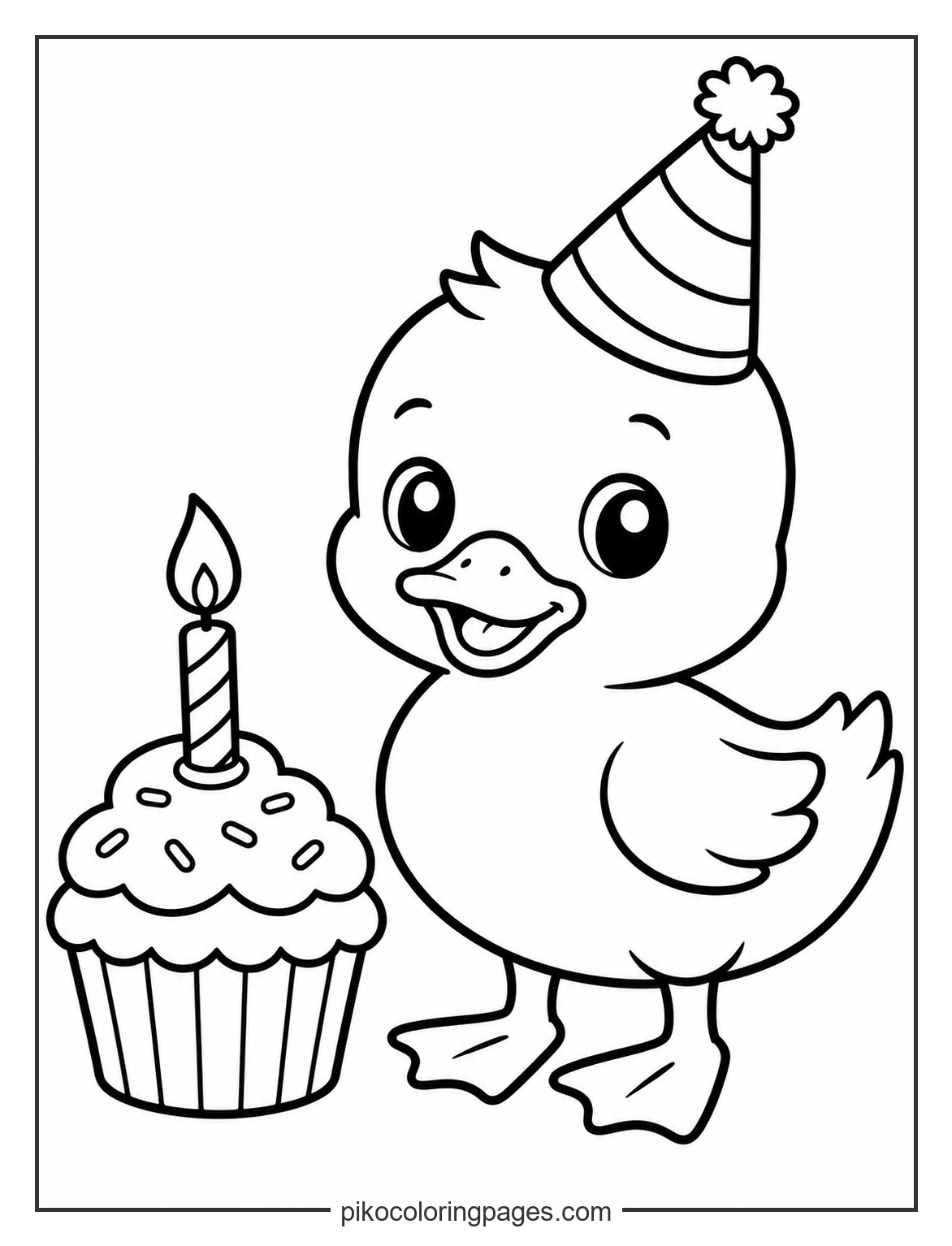
This duckling has a big secret—it is having a birthday party! The small flame on the cupcake and the stripes on the hat offer tiny areas that require a steady hand and a sharp crayon. This type of detail work is essential for developing ‘precision’ in fine motor skills, which is a major milestone for five- and six-year-olds preparing for cursive writing.
23. Duckling Hatching from an Egg
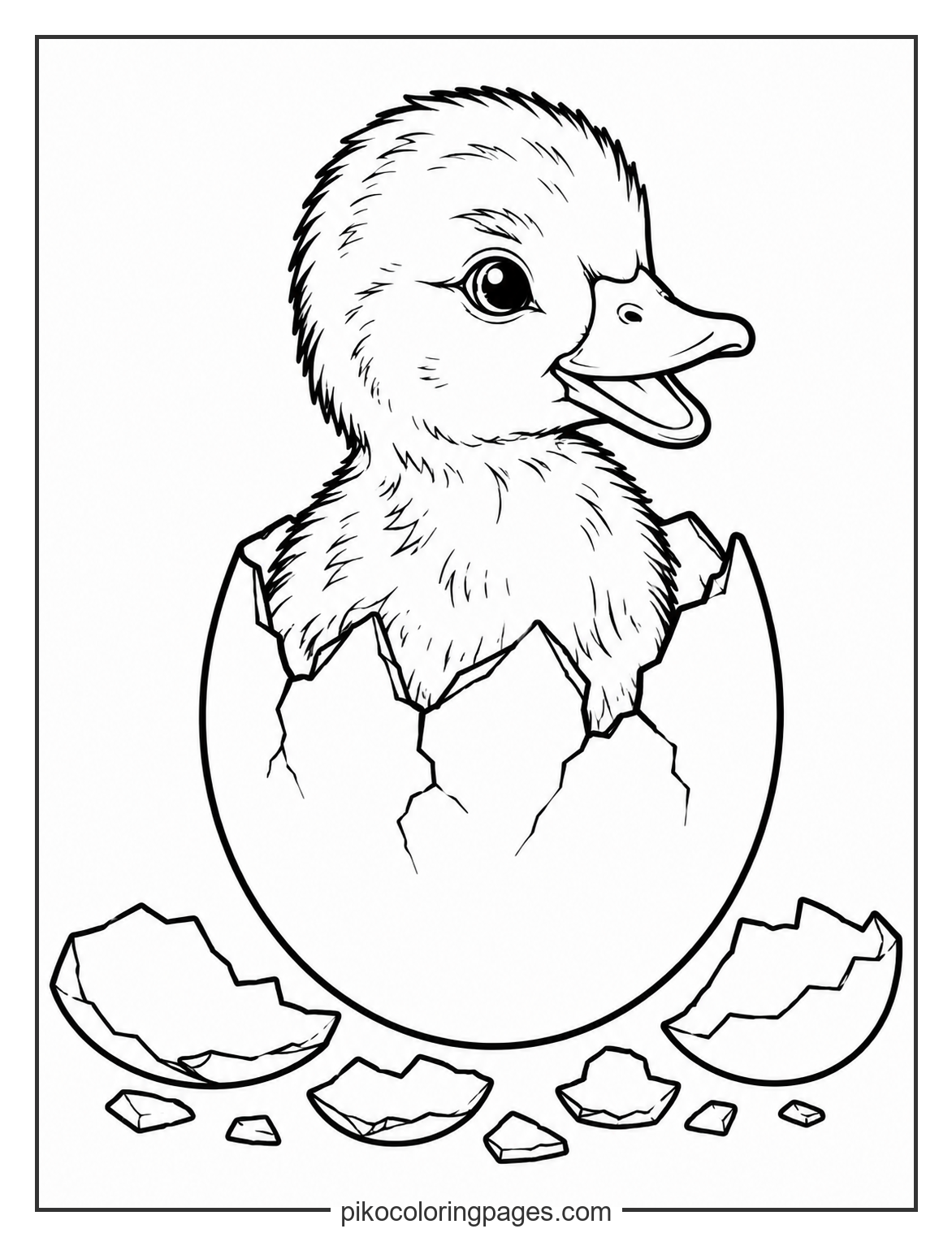
The jagged lines of the cracked eggshell provide a sharp visual contrast to the soft, rounded lines of the new duckling. This page is a fantastic tool for teachers who are explaining the concept of hatching and the life cycle of birds. It is a moment of pure curiosity as the duckling takes its first look at the world outside its shell.
Setting up a coloring station at home doesn’t have to be a major production. Sometimes the best moments happen with a few printed sheets on the kitchen table while you’re finishing up dinner. These duck pages are designed to be flexible. You can use them for a structured lesson about waterfowl or just as a quiet-time activity when things get a bit too chaotic. We have included everything from the chunky, bold lines of a rubber ducky to more detailed scenes of ducks in their natural habitats.
But don’t feel pressured to make every page a masterpiece. The value is in the process, not the final product. If your child scribbles over the whole thing in five minutes, they are still learning about cause and effect and color saturation. If they spend an hour meticulously shading every feather, they are building focus and patience. Both outcomes are a win for their growing minds.
When they finish, consider hanging their work on the fridge. This simple act of ‘publishing’ their art builds massive confidence. It shows them that their effort has value and that you notice their hard work. It is a small gesture that goes a long way in fostering a love for learning and self-expression. We hope these printables bring a bit of quiet, creative joy to your home or classroom today. Keep those crayons sharp and enjoy the silence that usually follows a brand-new coloring page.